High-Pressure Hydrogen O-Ring Q&A #9
Can Rubber O-Rings Be Used in Liquid Hydrogen Applications?
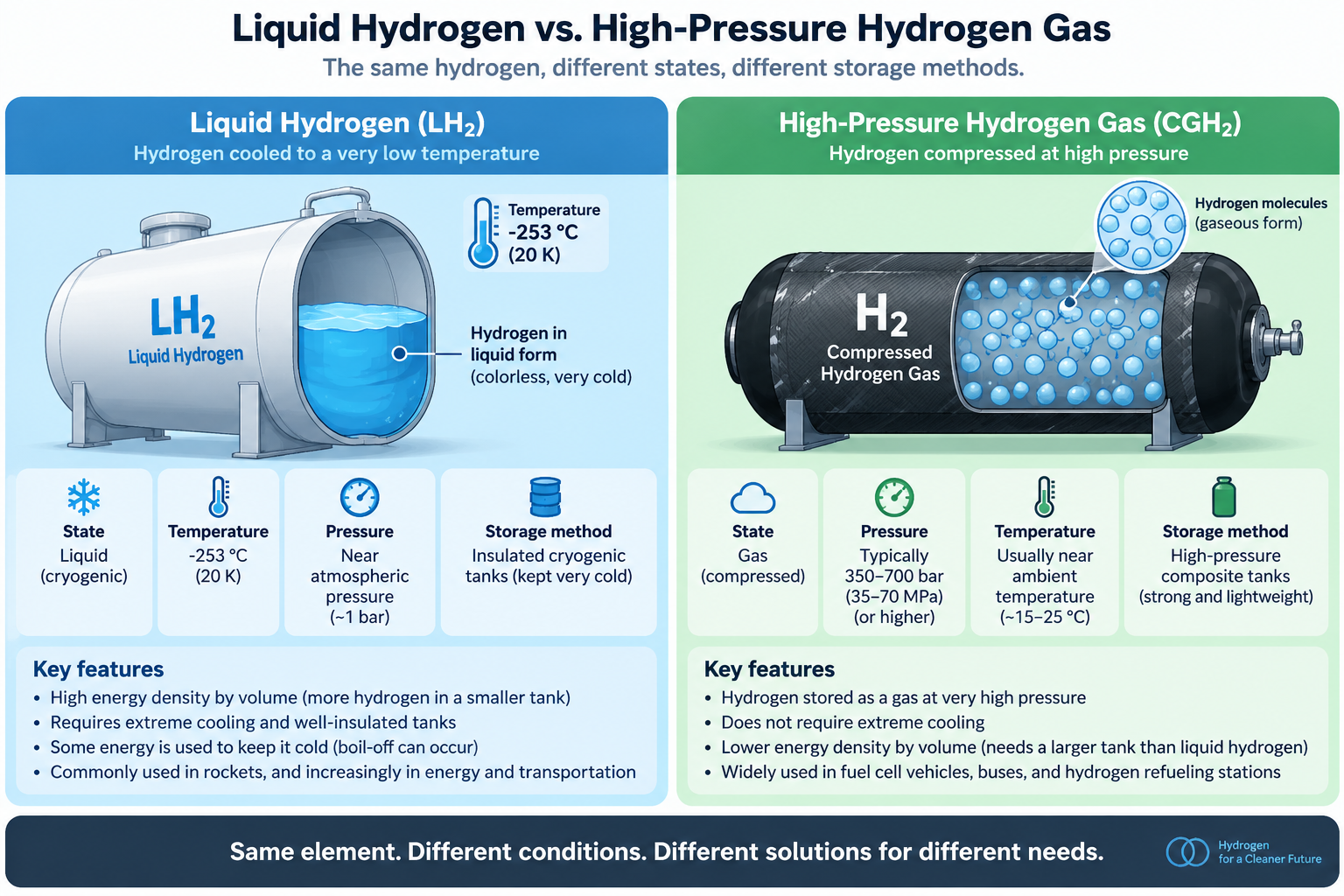
As the use of hydrogen energy expands, attention is being given not only to high-pressure hydrogen gas, but also to the storage and transportation of liquid hydrogen. Liquid hydrogen is expected to be useful for large-scale transportation and storage because it can greatly reduce volume. However, it creates an extremely severe environment for sealing materials.
Q. Can rubber O-rings be used in liquid hydrogen applications?
A. Liquid hydrogen is used at extremely low temperatures, so it is difficult to use standard high-pressure hydrogen gas O-rings as they are.
- Explanation
Liquid hydrogen exists at approximately -253°C. At this temperature, ordinary rubber materials lose most of their elasticity and become hard. Since an O-ring seals by using the elasticity of rubber to maintain contact with the mating surface, it becomes difficult for the O-ring to perform its original sealing function once elasticity is lost.
On the other hand, high-pressure hydrogen gas O-rings used in hydrogen stations are often required to perform at temperatures around -40°C. Although this is also a very demanding condition, it is completely different from the -253°C environment of liquid hydrogen.
For liquid hydrogen applications, it is necessary to consider not only the low-temperature properties of the material itself, but also the difference in thermal contraction between rubber and metal parts, seal structure, assembly method, and the ability to follow temperature changes. Therefore, even a material with proven performance in high-pressure hydrogen gas applications cannot necessarily be used directly in liquid hydrogen service.
- Takaishi Industry’s Comment
High-pressure hydrogen gas applications and liquid hydrogen applications require very different sealing technologies.
Takaishi Industry has mainly developed sealing materials for high-pressure hydrogen gas applications, including EPDM materials for low-temperature service around -40°C and FKM materials for high-temperature service. As the hydrogen society continues to develop, we will continue to study and evaluate sealing technologies for extreme low-temperature fields such as liquid hydrogen from both material and seal design perspectives.